
You run due diligence on the financials. You inspect the facility. You audit the staff. But there’s a new line item most buyers aren’t checking: whether the target funeral home exists in the AI discovery layer that is rapidly becoming the front door for families making end-of-life decisions.
The 5W Public Relations 2026 AI Visibility Index found that 88% of independent funeral homes are functionally invisible to AI-powered discovery. They don’t appear in ChatGPT recommendations. They’re absent from Google AI Overviews. Perplexity doesn’t mention them. Claude doesn’t know they exist.
Meanwhile, SCI’s Dignity Memorial brand captures 16.5% of all AI citations in the deathcare category. That isn’t an accident. It’s a structural advantage built on content volume, schema markup, and review density — the exact signals AI systems use to decide who gets cited and who doesn’t.
For a buyer, that gap is a measurable acquisition variable. And ignoring it means discovering the cost after closing.
Why AI Discovery Matters Right Now
The way families find funeral homes is shifting faster than most operators realize. The old pipeline — Google search, organic click, website visit, phone call — still works. But a second pipeline is running alongside it, and it’s growing.
That pipeline looks like this:
- A family member asks ChatGPT: “What should I look for in a funeral home in [city]?”
- ChatGPT returns a structured answer — criteria, considerations, and sometimes specific names
- The family verifies on Google, reads reviews, and makes contact
Or this:
- A family member types “funeral homes near me” into Google
- Google’s AI Overview generates a summary answer at the top of the results page
- The summary cites three or four sources — funeral homes with strong content authority
- Organic results get pushed below the fold
- The family clicks an AI-cited source or calls directly from the summary
In both cases, the funeral homes that get mentioned in the AI response win the first-contact opportunity. The ones that don’t get mentioned don’t lose a ranking — they lose the entire interaction. The family never knows they exist.
This matters most for at-need arrangements, where families are making decisions under time pressure and gravitating toward the first credible option they find. A funeral home that appears in an AI response is credible by default. One that doesn’t appear has to be found through other channels — channels that are shrinking.
The Acquisition Audit: Measuring Your Target’s AI Footprint
This is due diligence, not marketing strategy. Before you make an offer, you need to know where the target stands in AI discovery — and where its competitors stand.
Step 1: Query the Major AI Systems
Open ChatGPT, Claude, Perplexity, and Gemini. Ask each one the same set of questions:
- “What are the best funeral homes in [city]?”
- “How do I choose a funeral home in [city]?”
- “What funeral homes near [zip code] offer cremation services?”
- “Funeral home recommendations in [city] with good reviews”
Record which funeral homes appear in the responses. If your target doesn’t show up in any of them, it has zero AI citation share. If a competitor — especially an SCI property — appears in multiple responses, that competitor has structural first-mover advantage in the AI layer.
Step 2: Check Google AI Overviews
Search Google for the same queries. Look at the AI Overview panel at the top of results. Note whether your target appears in the summary or only in the traditional organic listings below. If the target only appears in organic results, its visibility is being compressed by the AI layer even if its SEO rankings look strong on paper.
Step 3: Audit the Signals That Drive Citations
AI systems don’t cite funeral homes at random. They pull from structured signals:
- Schema markup. Does the target’s website use structured data —
FuneralHomeorLocalBusinessschema, FAQ markup, service descriptions in JSON-LD? Most independent funeral homes have none. - Review volume and quality. How many Google reviews does the target have? What’s the average rating? AI systems weight review signals heavily. The industry benchmark is 40–120 reviews at 4.3–4.7 stars. Under 20 reviews is a red flag for AI visibility.
- Content depth. Does the website have substantive, original content — guides, planning resources, detailed service descriptions? Or is it a three-page brochure site with a homepage, an about page, and a contact form? AI systems cite content authorities. A brochure site has nothing to cite.
- Google Business Profile completeness. Are services listed? Are hours accurate? Are photos current? Is the profile verified and actively managed?
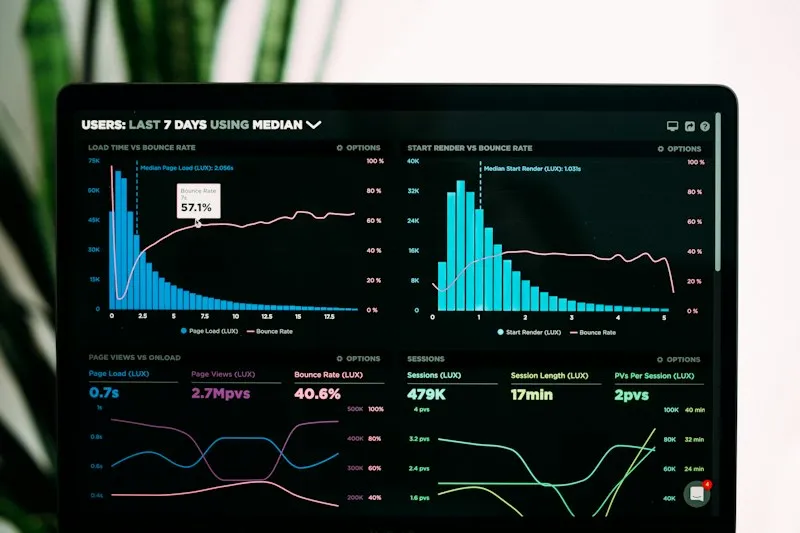
AI citation share is measurable. The audit starts with structured data, reviews, and content depth.
Step 4: Map the Competitive Landscape
Run the same audit on every competitor in the target’s market. You need to know whether the target is invisible in a market where everyone is invisible (opportunity) or invisible in a market where a consolidator already dominates the AI layer (problem). More on this distinction below.
If you’re already auditing the target’s broader technology stack, the technology and software due diligence guide covers what to look for beyond AI visibility.
What Drives AI Citation Share
Three categories of signals determine whether a funeral home appears in AI-generated responses. Understanding them tells you what remediation looks like after closing.
Structured Data and Schema Markup
AI systems parse structured data more efficiently than raw HTML. A funeral home with proper schema markup — business type, services offered, geographic area, operating hours, pricing information — gives AI systems clean, machine-readable signals. A funeral home without it forces the AI to infer everything from unstructured page content, and inference is unreliable.
Most independent funeral homes have zero structured data. Their website builders didn’t implement it. Their web hosting providers don’t support it. It was never necessary for traditional SEO, so nobody prioritized it. But in an AI discovery environment, it’s the difference between being parseable and being invisible.
Review Volume, Quality, and Velocity
AI systems treat reviews as a trust signal. Volume matters — a home with 85 reviews carries more weight than one with 12. Quality matters — a 4.5-star average signals reliability. But velocity matters most: are reviews arriving steadily, or did 40 reviews appear in one month and then stop?
Google’s 2026 policy update explicitly prohibits staff review solicitation quotas, which means the old tactic of pressuring families to leave reviews is now a compliance risk. Organic review velocity — reviews that arrive naturally because the service was genuinely good — is the only sustainable signal. A funeral home with low review velocity has a service problem, a process problem, or both.
When evaluating review health as part of a broader acquisition, your first-year digital marketing playbook covers post-closing review strategy in detail.
Content Authority
AI systems cite sources that demonstrate expertise. A funeral home website with detailed planning guides, transparent pricing pages, community resource listings, and substantive FAQ content gives AI systems something to reference. A three-page brochure site does not.
Content authority compounds. Every substantive page increases the probability that an AI system will reference the site for a related query. A funeral home with 30 well-written resource pages has exponentially more citation surface area than one with 3 pages. The AI readiness and technology maturity assessment framework quantifies this gap.
The Cost of Closing the Gap
If your target is algorithmically invisible — and statistically, it is — you need to budget for remediation. This isn’t optional marketing spend. It’s a capital expenditure required to maintain the business’s competitive position in a discovery environment that has permanently shifted.
Here’s what the remediation typically involves:
Website rebuild or upgrade: $5,000–$15,000. Most invisible funeral homes have outdated websites built on platforms that don’t support structured data, modern SEO, or content management at scale. A rebuild includes schema markup implementation, responsive design, page speed optimization, and a content management system that lets you publish without calling a developer.
Structured data implementation: $1,500–$3,000. If the existing site is modern enough to keep, adding schema markup, JSON-LD, and FAQ structured data is a standalone project. This is the highest-ROI intervention — it makes the site machine-readable without changing what humans see.
Review generation strategy: 12–18 months, minimal direct cost. You can’t buy reviews. You can’t rush them. You build a process — follow-up touchpoints, easy review links, staff training on service moments that naturally prompt feedback — and let it run. Budget 12–18 months to move from 15 reviews to 80+. The cost is process design and staff time, not media spend.
Content program: $500–$1,500/month ongoing. Publishing two to four substantive resource pages per month builds citation surface area over time. Topics should align with the queries families actually ask — cost breakdowns, planning checklists, veterans benefits, pre-need vs. at-need guidance. This is where AI citation share is built, one page at a time.
Local SEO maintenance: $300–$800/month. Google Business Profile management, citation consistency across directories, local link building, and monitoring for Google’s auto-modifications to your profile.
Total first-year remediation budget: $20,000–$40,000. This is a post-closing capital need. Factor it into your acquisition model the same way you’d factor in a facility renovation or equipment upgrade. If the seller is pricing the business as though its current lead-generation capacity is sustainable, and AI discovery is about to compress that capacity, the remediation cost is a negotiation point.
If you’re modeling these costs against competing bids from private equity buyers, understand that PE firms are already pricing AI readiness into their acquisition models. A target that needs $40K in digital remediation is worth $40K less to a sophisticated buyer.
The Strategic Flip: When Invisibility Is an Opportunity
Not every AI-invisible target is a liability. The competitive context determines whether you’re looking at a problem or an opening.
Scenario A: The Invisible Market
Your target is invisible. But so is every competitor within 30 miles. No funeral home in the market has schema markup. Nobody has more than 20 reviews. Content is thin across the board. SCI doesn’t operate in the area.
This is the opportunity case. You can dominate AI discovery for the entire market with a modest $20K–$30K investment that no local competitor is making. In 12–18 months, you’re the funeral home that ChatGPT recommends, the one Google’s AI Overview cites, the one Perplexity surfaces. First-mover advantage in AI visibility is durable — once you’re the cited authority, displacing you requires a competitor to build the same infrastructure from scratch.
In markets like this, AI invisibility may actually reduce the acquisition price without reducing the business’s post-acquisition potential. You’re buying the operation at its current value and investing to capture a discovery channel that doesn’t yet exist in the market.
Scenario B: The Dominated Market
Your target is invisible. But SCI’s Dignity Memorial location three miles away has 200 reviews, a fully structured website, and appears in every AI response for funeral-related queries in the market. A regional consolidator on the other side of town has 150 reviews and a content-rich site.
This is the problem case. You’re not just building from zero — you’re building from zero against entrenched competitors who already own the AI citation share. The investment is the same $20K–$40K, but the timeline to meaningful citation share is longer and the outcome is less certain. You’re climbing a steeper hill.
In this scenario, the AI visibility gap should directly inform your offer price. The remediation cost is higher in effective terms because you’re buying share from established competitors rather than claiming unclaimed territory. And the competitive pressure means you may never achieve parity — only reduce the gap.
Scenario C: The Mixed Market
Your target is invisible. One competitor has moderate AI presence. Others are as invisible as the target.
This is the most common scenario. It means the market is in transition — AI discovery is starting to matter but hasn’t been fully captured by any single player. Your remediation investment has a reasonable probability of capturing meaningful share, but you’re not the only one who will figure this out. Speed matters. The first operator to build AI visibility in a transitional market gets a compounding advantage.
What to Do With This Information
Add AI visibility to your due diligence checklist alongside the standard deal sourcing and evaluation process. Specifically:
- Query all five major AI systems before your first site visit. Document what appears.
- Audit the target’s structured data, review profile, and content depth. Score it against the benchmarks above.
- Map the competitive landscape. Determine whether you’re in Scenario A, B, or C.
- Budget $20K–$40K for remediation and add it to your post-closing capital plan.
- Adjust your offer accordingly. If the seller is pricing the business on current lead flow and that flow is about to compress, the AI visibility gap is a legitimate basis for price adjustment.
The 88% invisibility rate means this issue affects nearly every independent funeral home on the market. The question isn’t whether your target has an AI citation gap. The question is how deep it is, what it costs to close, and whether the competitive landscape makes that investment worthwhile.
The buyers who understand this are already adjusting their models. The ones who don’t will discover it after closing — when the lead flow they paid for doesn’t materialize and the remediation they didn’t budget for becomes urgent.
Funeral Home Buyer provides educational content for professionals evaluating business acquisitions in the funeral services industry. This article is not legal, financial, or tax advice. Consult qualified professionals before making acquisition decisions.