
Every funeral home acquisition pitch you will hear in the next five years includes some version of the same line: “Baby boomers are aging. Demand is guaranteed.” Brokers say it. Sellers say it. The NFDA data deck says it in a bar chart that goes up and to the right.
They are not wrong. But they are not being precise, either — and in a capital-intensive acquisition with a 10- to 20-year ownership horizon, “demand is going up eventually” is not a financial thesis. It is a bumper sticker.
Nobody hands you the actuarial timeline. Nobody maps when the wave actually arrives in your market, how long the peak lasts, or whether you — the buyer closing in 2026 or 2027 — will still own the business when volume growth hits its steepest curve. That gap between the pitch and the math is where bad acquisition timing lives.
This piece does the modeling the pitch skips. We will walk through the actual demographic mechanics, overlay them on a realistic ownership window, and show you what the boomer demand curve looks like from the buyer’s chair — not the seller’s podium.
For the broader market case behind funeral home acquisition, see The Death Care Investment Thesis.
The Thesis Everyone Repeats, Nobody Models
The demographic argument for funeral home acquisition is real. It is also lazy the way most people deploy it.
Here is what the pitch says: approximately 73 million Americans were born between 1946 and 1964. That is the largest generational cohort in U.S. history. They are aging. They will die. Every one of them will need some form of death care services. Therefore, demand for funeral services is structurally guaranteed to increase over the coming decades.
All of that is true. None of it tells you when.
The pitch treats 73 million boomers as a single block arriving at a single moment. In reality, the cohort spans 18 birth years. The oldest boomers turned 80 in 2026. The youngest turned 62. The difference between those two ages, in terms of mortality probability, is enormous — roughly a 4x gap in annual death rates according to Social Security Administration actuarial life tables.
A buyer who hears “boomers are dying” and assumes the wave is cresting right now will overpay. A buyer who assumes it is decades away will miss the early upslope. The actual timeline is more nuanced than either version.
The Actuarial Timeline: When the Deaths Actually Happen
Let us put numbers on it.
The leading edge is already here (born 1946–1950)
The oldest boomers — roughly 20 million people born between 1946 and 1950 — are now 76 to 80 years old. They are deep into the high-mortality years. For an 80-year-old American male, the probability of dying within the next year is approximately 6–7%, according to SSA life tables. For a 62-year-old, it is closer to 1.5%.
These deaths are not future demand. They are current demand. CDC WONDER mortality data shows U.S. deaths rising from roughly 2.8 million per year in 2019 to over 3.1 million in recent years. Some of that increase is pandemic-related, but the underlying trend — more Americans entering their late 70s and 80s — is structural and will continue regardless.
The peak: 2035–2055
The bulk of the baby boom — those born between 1955 and 1964, roughly 40 million people — enters the 75-to-90 age band between approximately 2035 and 2055. That is when annual U.S. deaths are projected to climb most steeply.
Census Bureau population projections estimate total annual deaths could reach 3.6 to 4.0 million or more by the mid-2040s, depending on assumptions about life expectancy trends. That is a roughly 25–30% increase over current levels — spread over two decades, not arriving overnight.
The tail: post-2055
By 2060, the youngest boomers will be 96 years old. The cohort will be largely spent. Annual deaths will begin declining unless offset by population growth from immigration or subsequent generations. This is the far side of the curve, and it matters to anyone thinking about long-term exit value.
The shape of the curve
Think of it as a long hill, not a cliff. Volume is already rising. The slope steepens noticeably around 2030–2035. The peak plateau runs roughly 2040–2055. Then it declines.
The NFDA reports year-over-year increases in total cases served at the national level, consistent with this timeline. The question for any individual buyer is not whether total volume rises — it will — but how much of that rise lands inside your ownership window, in your market.
The 10-Year Ownership Window: What You Actually Capture
Most funeral home buyers plan a 10- to 20-year ownership horizon. The economics of the acquisition — the debt service, the return on invested capital, the eventual exit — all depend on what happens to volume during that specific window.
For more on building these projections into your financial model, see Building Your Financial Model.
The 10-year buyer (2026–2036)
You close in 2026. You hold through 2036. What do you see?
- Years 1–5 (2026–2031): Moderate, steady volume growth driven by the oldest boomers (born 1946–1955) moving through their late 70s and 80s. This is real growth, but it is the gentle part of the slope. You might see 1–2% annual volume increases at the national level, with significant local variation.
- Years 6–10 (2031–2036): The slope starts to steepen as the larger mid-boom cohort (born 1955–1960) enters high-mortality years. Growth may accelerate to 2–3% annually. You benefit from the beginning of the steeper curve.
The 10-year owner captures the approach to peak volume, not the peak itself. That is still a tailwind — your case count at exit is meaningfully higher than at entry. But it is not the dramatic windfall the broker’s slide deck implies. If you paid a premium multiple on the assumption of explosive near-term growth, the returns may disappoint.
The 20-year buyer (2026–2046)
You close in 2026. You hold through 2046. Now you are capturing most of the peak.
- Years 10–20 (2036–2046): This is where the steepest growth lives. The full mid-boom and late-boom cohorts are in their peak mortality years simultaneously. National volume could be 20–30% above 2026 levels.
The 20-year owner gets the real payoff — but 20 years is a long time to operate a business, especially one as operationally intensive as a funeral home. The question is whether you want to (or can) hold that long.
What this means for valuation
A seller in 2026 who prices the business on peak-demand assumptions is pricing in growth the buyer will not see for a decade. Be precise about which years of the demand curve your ownership window actually covers. This is directly relevant to how you evaluate Funeral Home Valuation multiples — a premium multiple should reflect the volume trajectory during your hold, not the national 30-year forecast.
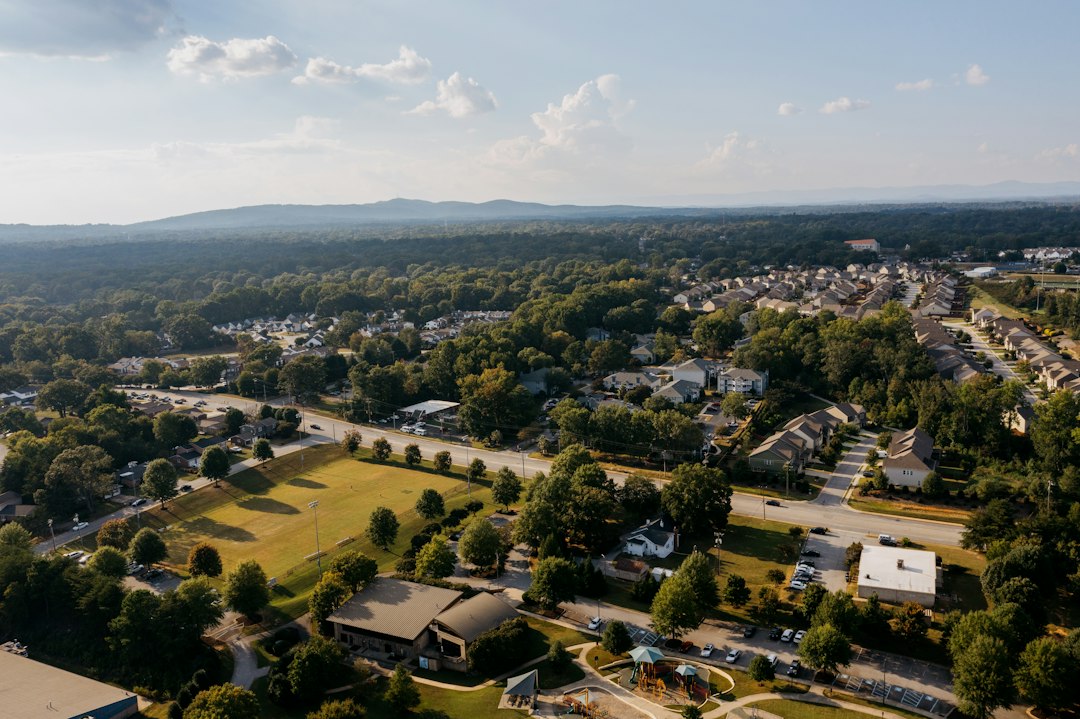
The boomer demand curve plays out differently in every local market — national averages will mislead you.
Market-Level Variation: National Averages Will Mislead You
Everything above describes the national picture. Your funeral home does not serve the nation. It serves a catchment area — typically a 15- to 30-mile radius. And the boomer distribution across that radius may look nothing like the national average.
Retirement-heavy markets see the wave early
Florida, Arizona, parts of the Carolinas, and other states with heavy boomer in-migration are already seeing elevated death volumes. A funeral home in Scottsdale or Sarasota has been riding the leading edge of this curve for years. The opportunity there is real but may already be priced in.
Young metros see it later
Cities with younger demographic profiles — Austin, Nashville, Denver, Raleigh — have fewer boomers per capita. The wave arrives later, and it may be smaller in relative terms. A funeral home in central Austin may not see meaningful boomer-driven growth until 2035 or beyond.
Rural markets are a special case
Rural and small-town America often has an older population profile than urban areas, because younger residents leave for cities. So the boomer concentration can be high. But the total population may be shrinking, which partially offsets the age-driven volume increase. A rural market might see boomer deaths rise 25% while total population drops 10%, netting out to a more modest gain.
For a deeper look at rural dynamics, see Buying a Rural Funeral Home.
Do the local work
This is the part the pitch always skips. Before you buy, pull Census Bureau age-cohort data for your target’s ZIP codes. Map the 65+, 75+, and 85+ populations. Project them forward over your planned ownership window. Overlay that on the home’s historical case count.
The Bureau of Labor Statistics publishes occupational outlook data for funeral services that reflects these projections at a regional level — another data point for your model.
If the local data supports the thesis, great. If it does not, the national average will not save you.
The Gen X Question: What Comes After the Wave
This is the part nobody wants to talk about.
After the boomers, the next cohort entering high-mortality years is Generation X — born roughly 1965 to 1980, currently aged 46 to 61. There are approximately 65 million of them. That is 8 million fewer than the boomers — an 11% drop in cohort size.
Gen X does not enter the high-mortality years (75+) until the 2040s. That means:
- For a 2026 buyer with a 10-year hold (exit 2036): Gen X mortality is irrelevant to your ownership window. You are entirely in boomer territory.
- For a 2026 buyer with a 20-year hold (exit 2046): You start to see the transition. Boomer deaths are still elevated, but the pipeline of new entrants into high-mortality years slows. The tail of your ownership window is the beginning of the post-boomer trough.
- For the next buyer — whoever you sell to: They inherit a declining demand curve. The person you sell to in 2040 or 2045 faces the Gen X trough as a core feature of their ownership window.
What this means for exit timing
The optimal exit is near the peak of boomer volume — roughly 2040–2050, depending on your local market. Sell during the upslope or near the peak, and the buyer still has a demand tailwind to pay for. Sell after the peak, and the buyer is looking at a smaller cohort (Gen X) that is still a decade from high-mortality years. That buyer will not pay the same multiple.
This is not a reason to avoid buying. It is a reason to be intentional about your ownership timeline and your exit strategy. The demographic math has a shape, and you want to sell on the right side of it.
What This Means for Your Acquisition Decision
Let us bring this down to decision-level.
The boomer wave is a tailwind, not a business plan
It is real, it is structural, and it will increase death care volume over the next 20–30 years. But it is not a substitute for sound acquisition fundamentals — a well-run operation, defensible market position, manageable debt service, and realistic revenue projections. Paying a premium for “boomer demand” without modeling the specifics of your market and your hold period is paying for a billboard.
Do not buy on national averages
Your funeral home’s volume trajectory depends on local demographics, not the CDC’s national death count. A 3% national increase might mean 5% in your market or 0.5%. Pull the census data. Run the projections. Know what your curve looks like.
Model your actual ownership window
Map the boomer demand curve onto your planned hold period. Are you a 10-year buyer? You capture the early upslope — helpful, not transformative. A 15-year buyer? You start to see the steeper growth. Twenty years? You get most of the peak. Know which segment of the curve you are buying into.
Price for what you capture, not the full wave
Sellers and brokers will present the 30-year demand story. You are not buying 30 years. You are buying your hold period. The multiple you pay should reflect the volume growth you will see, not the volume growth the third owner from now will see. For more on where the market stands today, see The 2026 Market.
Plan your exit around the curve
The best time to sell is when the buyer behind you still has a strong demand tailwind. That means selling on the upslope or near the peak — not after it. If you enter in 2026 and the peak in your market is around 2045, a 15- to 20-year hold puts you in the right zone. A 25-year hold has you selling into the Gen X trough.
The bottom line
Seventy-three million baby boomers will need death care services. That is a fact, not a forecast. But the timing — when the wave arrives in your market, how long it lasts, and where your ownership window sits relative to the peak — is the difference between a good acquisition and an expensive one.
The demographic data is public. The actuarial tables are free. The census projections are available down to the county level. The only reason to make a decision without this analysis is if you prefer the pitch to the math.
Do the math.
Key Takeaway
The boomer demographic wave is real and structural, but it is a 30-year curve, not a single event. A buyer closing in 2026 captures the early upslope over a 10-year hold and most of the peak over a 20-year hold. The steepest growth arrives between 2035 and 2055. After that, the smaller Gen X cohort (65 million vs. 73 million) creates a volume trough that affects exit multiples. Do not pay for the full wave — model your specific market, your specific hold period, and price accordingly.
Funeral Home Buyer provides educational content for professionals evaluating business acquisitions in the funeral services industry. This article is not legal, financial, or tax advice. Consult qualified professionals before making acquisition decisions.
The trademark FUNERAL HOME BUYER is used by this publication for identification purposes. This site is not affiliated with, endorsed by, or sponsored by any funeral home franchisor, broker, or trade association.