
Most buyers treat goodwill as a single line item on the purchase price allocation. It’s not. The IRS, the courts, and the economics of funeral home transitions all distinguish between two fundamentally different assets: personal goodwill and institutional goodwill. One transfers. The other walks out the door with the seller — and in most independent funeral homes, it’s the majority of what you’re paying for.
Understanding this split before you bid isn’t academic. It determines your purchase price, your earn-out structure, your transition plan, your tax treatment, and your first-year revenue trajectory.
Here’s how to see it, measure it, and structure around it.
The Number Behind the Number
In a typical independent funeral home transaction, goodwill represents 40–60% of the total purchase price. On a $1.2 million deal, that’s $500,000 to $700,000 allocated to something that isn’t real estate, equipment, rolling stock, or preneed contract value.
But that number hides a critical distinction.
Personal goodwill is the value attached to the owner as an individual. Their name, their reputation, the clergy who refer to them by first name, the hospice nurses who hand out their personal card. Thirty years of funerals where they held someone’s hand at the worst moment of that person’s life.
Institutional goodwill is the value attached to the business itself. The location, the brand recognition independent of any single person, the staff who handle arrangements without the owner present, the Google reviews that mention the funeral home rather than the funeral director.
Personal goodwill is non-transferable. It starts decaying the moment the seller hands you the keys. Institutional goodwill is what actually conveys — the asset you can operate, grow, and eventually resell.
In most independent funeral homes, personal goodwill is the majority. Sometimes 70% or more. You need to know the split before you write a number on a term sheet.
The IRS Distinction That Matters
This isn’t just a philosophical framework. It’s a tax law distinction with real dollar consequences.
IRC Section 197 governs how goodwill is amortized — both personal and institutional goodwill are amortizable over 15 years when acquired as part of a business purchase. Section 1060 governs how the total purchase price gets allocated across asset classes, and goodwill sits in the residual class — what’s left after tangible assets, preneed contracts, and other identifiable intangibles are accounted for.
The catch: you’re amortizing an asset — personal goodwill — that may be depreciating in real terms far faster than the 15-year schedule acknowledges.
Courts have developed specific tests to distinguish the two. The landmark cases — Martin Ice Cream Co. v. Commissioner, Norwalk v. Commissioner, and Howard v. United States — established questions that map directly onto funeral home deals:
- Would customers return if the owner left? Families who came back because of a personal relationship may not come back for a new director.
- Are the key relationships personal or institutional? Does the hospice refer to “Thompson Funeral Home” or to “Bob Thompson”?
- Is the brand the person or the business? When the business carries the owner’s surname — and in funeral service, it usually does — untangling the two is exceptionally difficult.
As GRF CPAs’ analysis of goodwill explains, the allocation affects both buyer amortization and seller tax treatment. Sellers prefer personal goodwill allocated to consulting agreements because it gives them capital gains treatment. Buyers need to understand they’re paying for an asset whose real-world useful life may be 18 months, not 15 years.
The Funeral Home Goodwill Problem
Death care is unusually personal-goodwill-heavy compared to other small business sectors. This isn’t a flaw in the industry — it’s a structural feature of what funeral service is.
Consider what makes funeral homes different from other small businesses:
- The owner is often the brand. In a 200-call-per-year home, the owner-director may personally handle 120–150 arrangements. Families don’t distinguish between the person and the business.
- Referral relationships are deeply personal. Clergy, hospice staff, and hospital chaplains refer families to a person they trust — trust built over years of 2 a.m. phone calls answered on the first ring. It doesn’t transfer by contract.
- Community presence compounds over decades. The Rotary board seat, the Little League sponsorship, the presence at every community event — that’s personal goodwill. A new owner can’t replicate it on day one.
- Repeat business is generational. “We’ve always used Thompson’s” is built on a relationship with a specific person. When that person leaves, the “always” resets.
- The NFDA’s industry data shows independent funeral homes average 113 calls per year. At that volume, every interaction is high-touch with no operational layer between owner and customer.
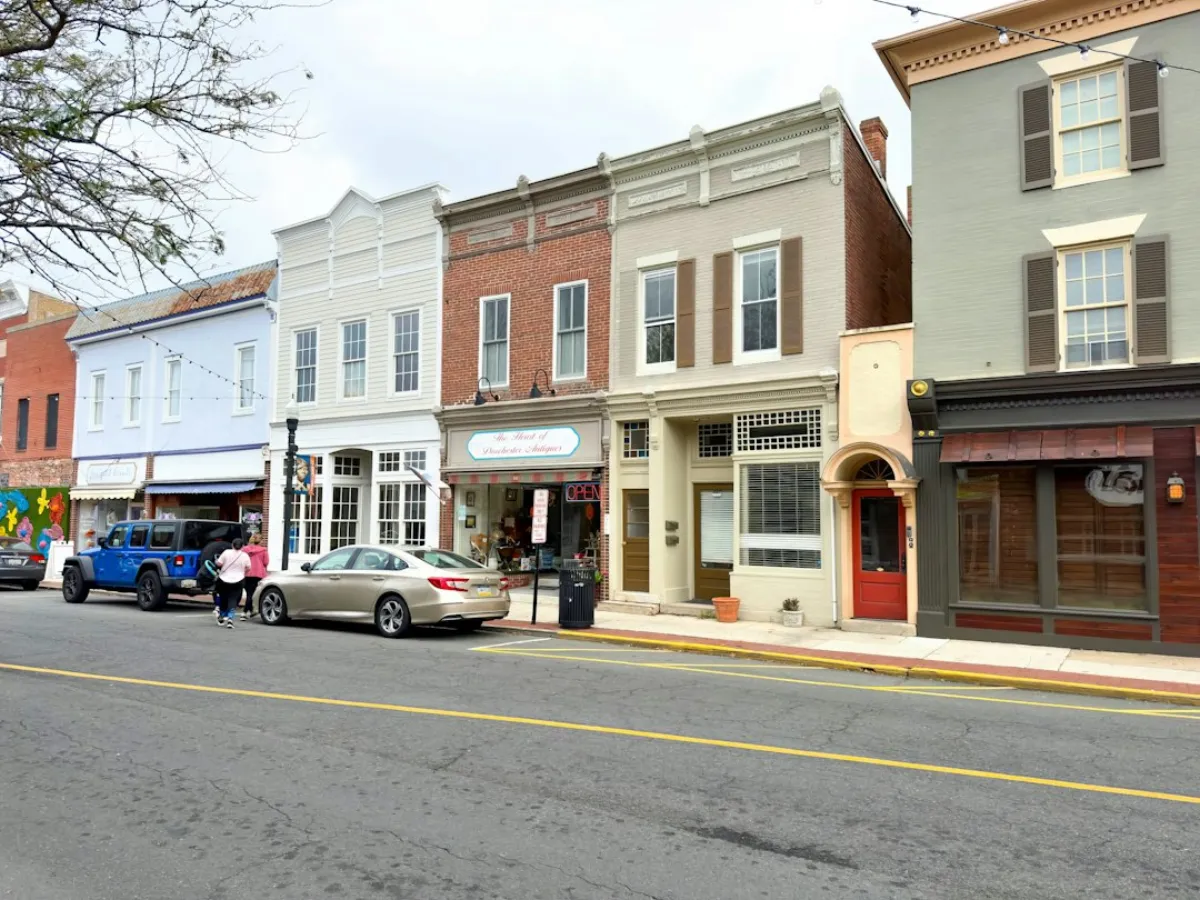
In rural and small-market funeral homes, the owner’s personal reputation is often inseparable from the business itself.
In rural and small-market homes, the concentration is even more extreme. A funeral home in a town of 8,000 where the owner has been the only director for 25 years is essentially the owner wearing a building.
This doesn’t mean you shouldn’t buy. It means you need to price for what transfers and what doesn’t.
Measuring the Split Before You Bid
You can’t get a precise number — no appraiser can tell you it’s exactly 62% personal and 38% institutional. But you can build a working score that protects you from overpaying for goodwill that won’t survive the closing.
Run through these indicators during due diligence:
Owner Dependency
- How long has the owner been operating? Longer tenure means deeper personal relationships and higher personal goodwill concentration.
- How many staff handle arrangements independently? If every arrangement goes through the owner, nearly all client-facing goodwill is personal.
- What percentage of calls does the owner personally direct? Ask for the arrangement logs. If the owner’s name is on 70% of cases, you have your answer.
- Does the brand include the owner’s surname? “Thompson Funeral Home” carries personal goodwill in the name itself. “Evergreen Memorial Chapel” has a head start on institutional identity.
Referral Sources
- Who do clergy and hospice staff call? If they have the owner’s cell and have never called the main line, that referral relationship is personal.
- Are referral relationships documented? A CRM with contact history is institutional. A Rolodex in the owner’s desk drawer is personal.
- What happens when the owner takes vacation? If the owner doesn’t take vacations, that tells you everything.
Brand vs. Person
- Check the Google reviews. “Bob was wonderful” is personal goodwill. “Thompson’s took great care of us” is institutional.
- Drive the market. Ask people what they know about the funeral home. Do they name the business or the person? Read more about rebuilding community trust as a new owner.
Repeat and Referral Patterns
- What percentage of families are repeat vs. first-time? High repeat rates with a long-tenured owner mean those relationships are personal.
- Where do new families come from? Google searches and drive-by visibility are institutional. “Pastor Williams recommended you” is personal — and personal to the current owner.
Score each indicator. You’re not aiming for a precise allocation — you’re building a picture. A funeral home where the owner handles most arrangements, carries the relationships in their head, and has their surname on the sign is 65–75% personal goodwill. A home with a strong secondary staff, a recognized brand independent of the owner, and documented systems might be 35–45% personal.
That difference, on a $700,000 goodwill allocation, is $200,000 or more in at-risk value.
Structuring Around the Fracture
Once you understand the split, you can structure the deal to convert personal goodwill into institutional goodwill during the transition — and pay the seller for the conversion itself, not for a static asset that’s already depreciating.
Transition Consulting Agreements
Keep the seller visible and active for 12–24 months — not as a figurehead, but as the person who introduces you to every clergy member, hospice contact, and family who walks through the door.
This is the mechanism by which personal goodwill transfers. Price it at $5,000 to $10,000 per month and tie deliverables to specific introductions, co-conducted arrangements, and referral source meetings.
The seller psychology often works in your favor here. Many sellers are relieved to have a defined role during transition rather than a clean break.
Earn-Outs Tied to Case Volume Retention
Structure a portion of the purchase price as an earn-out tied to case volume over 24–36 months. If the goodwill transfers successfully — meaning families and referral sources stay — the seller earns the full amount. If personal goodwill decays as expected, the total purchase price adjusts downward.
A typical structure: 70–75% at closing, 25–30% as an earn-out measured against a trailing-twelve-month case count baseline. If year-one volume drops below 85% of the baseline, the earn-out adjusts proportionally.
This aligns incentives. The seller is motivated to actively support the transition because their payout depends on it. You’re protected against paying full price for goodwill that doesn’t survive.
Referral Source Transition Plan
Map every referral source during due diligence, then build a 90-day introduction calendar:
- Weeks 1–4: Joint visits to every hospice, hospital, and nursing home in the service area.
- Weeks 5–8: In-person clergy introductions — at their churches, on their turf. Not a mass email.
- Weeks 9–12: Seller accompanies you on first calls with families who hold pre-need arrangements.
Document each introduction. This is the conversion of personal goodwill to institutional goodwill in real time.
The Rebrand Decision
If the business carries the seller’s surname, rebranding immediately severs the personal goodwill connection. Keeping the name preserves it but means you’re operating under someone else’s identity.
The right answer depends on the split. Strong institutional goodwill — recognized brand, capable staff, visible location — supports a gradual rebrand over 18–24 months. Overwhelmingly personal goodwill makes keeping the name a band-aid. The families came for the person, not the sign. More on navigating this decision.
Non-Compete Provisions
Standard in funeral home transactions, but the teeth matter. A non-compete preventing the seller from competing within 30 miles for 5 years protects against the worst case: the seller opens across town and takes the personal goodwill with them.
Make sure it covers employment, not just ownership. A seller who becomes lead director at a competitor three miles away takes the referral relationships just as effectively.
The Tax Angle You Can’t Afford to Miss
Purchase price allocation under Section 1060 determines your depreciation and amortization schedule for the next 15 years. How goodwill is categorized — and whether portions are recharacterized as consulting agreements, non-competes, or other identifiable intangibles — changes the math significantly.
Here’s what matters:
- Consulting agreement allocation is deductible over the agreement term (typically 1–2 years) rather than 15 years. Accelerated deductions for the buyer; ordinary income for the seller — so there’s a negotiation.
- Non-compete allocation is amortizable over the non-compete term (typically 3–5 years). Faster deductions than the goodwill bucket.
- Remaining goodwill goes into the 15-year Section 197 bucket.
A dollar moved from 15-year amortization to a 2-year consulting deduction is worth materially more in present value. These decisions are interconnected with your overall deal structure and acquisition tax strategy.
Work with a CPA who understands funeral home transactions specifically. General M&A tax advice misses the industry nuances — preneed trust treatment, state-specific licensing transfer costs, and the interplay between the consulting agreement and the non-compete. Capital advisors like Lendesca can help model how different allocation structures affect debt service and cash flow in the early years when you’re simultaneously paying acquisition debt and funding the transition.
The Sofer Advisors guide to funeral home valuation provides additional context on how professional appraisers approach the goodwill allocation in death care transactions — it’s worth reading before your CPA engagement.
What This Means for Your Bid
Every funeral home acquisition involves a goodwill fracture. The question is whether you see it before closing or after.
If your due diligence reveals 70% personal goodwill on a $700,000 allocation, you’re looking at $490,000 in value that will decay after the seller leaves. That doesn’t mean don’t buy. It means:
- Price for the institutional goodwill that transfers, not the total goodwill the appraiser reports.
- Structure personal goodwill as earn-out and consulting fees, converting a static overpayment into an incentive for the seller to support transition.
- Build a 12–24 month conversion plan that systematically moves relationships and community presence from the seller to you and your staff.
- Allocate your purchase price for tax efficiency, accelerating deductions during the cash-tight early years.
- Read your funeral home valuation methods in context. A 3.5x multiple on a high-institutional-goodwill home is a different deal than 3.5x on a high-personal-goodwill home, even at identical EBITDA.
The goodwill fracture isn’t a reason to walk away. It’s a reason to walk in with your eyes open, your structure aligned, and your transition plan ready before the ink is dry.
Funeral Home Buyer provides educational content for professionals evaluating business acquisitions in the funeral services industry. This article is not legal, financial, or tax advice. Consult qualified professionals before making acquisition decisions.