The Question Nobody Answers
Every piece of funeral home acquisition advice starts from the same assumption: you are buying a full-service funeral home. A building with viewing rooms and a chapel. A staff of licensed directors and embalmers. A casket showroom. A preneed book. The whole apparatus.
But there is another path.
The national cremation rate has crossed 63% and it is still climbing. In western states it is already above 80%. Families are choosing simpler dispositions, shorter timelines, and lower price points — and that shift has created a category of business that barely existed a generation ago: the cremation-only operation.
Lower capital requirements. Simpler operations. A demographic tailwind that shows no sign of reversing. So why does almost nobody in the acquisition space talk about buying one?
Partly because most brokers and advisors come from the full-service world and frame every deal that way. Partly because the economics are genuinely different — and the differences cut both ways. And partly because the honest answer is complicated: a cremation-only operation is a real business with real margins, but it is not the same business as a funeral home, and pretending otherwise will get you in trouble.
This is the breakdown nobody writes. What a cremation-only acquisition actually looks like, what it costs, what it earns, what you lose by choosing it, and how to decide whether it fits your situation.
What a Cremation-Only Operation Actually Looks Like
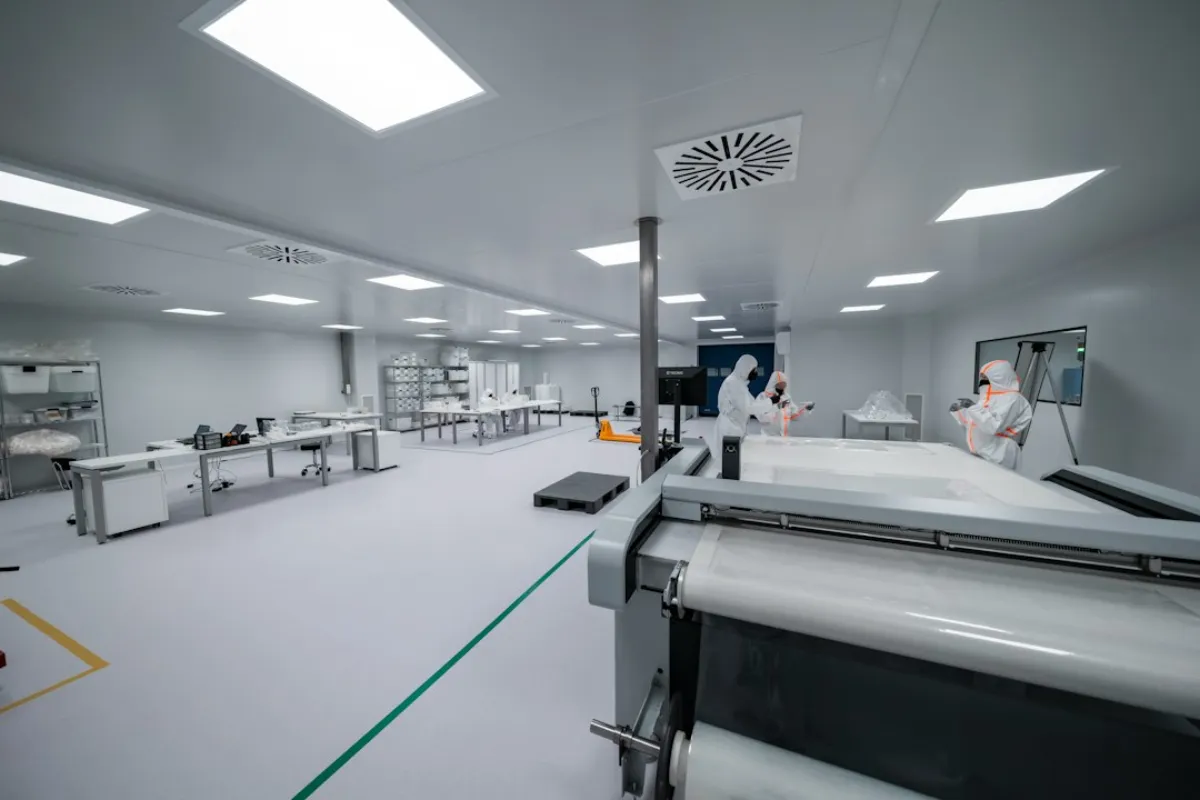
Forget the stately colonial building on the tree-lined boulevard. A cremation-only operation looks more like a light industrial facility, because that is essentially what it is.
The physical plant
- No viewing rooms, no chapel, no casket showroom
- A retort (cremation unit) and its mechanical room
- A prep and processing area
- Minimal front-of-house — often just a small arrangement office and a reception desk
- Cold storage for remains awaiting cremation
- Some operations are entirely phone-and-web, with no public-facing space at all
The staff
Typically two to five people. A manager or owner-operator handling arrangements and administration. One or two crematory operators. Maybe a part-time transport driver.
The critical difference: most states do not require a licensed embalmer on staff at a cremation-only facility. Some states require a licensed funeral director to make arrangements; others do not if the facility is licensed as a crematory rather than a funeral home. Check your state’s licensing requirements early. This is one of the first questions your attorney should answer, and the answer varies enormously.
The revenue picture
- Direct cremation (no service, no viewing): $1,500 to $2,000 per case
- Cremation with memorial service: $2,500 to $3,500 per case
- A busy cremation-only operation handles 500 to 2,000 cases per year
The capital requirement
- Acquisition of an existing operation: $200,000 to $500,000
- Building from scratch: $300,000 to $800,000
- The retort alone is $150,000 to $300,000 — it is the single largest capital item and drives much of the total
For context, the SBA’s lending programs are structured for exactly this range. A cremation-only acquisition fits comfortably inside an SBA 7(a) loan. A full-service funeral home at $1.5M to $3M is a different financing conversation entirely. (For more on SBA financing in funeral service, see SBA Loans for Funeral Homes.)
What You Get
The case for a cremation-only operation is straightforward, and it is real.
Lower capital entry
$200,000 to $500,000 versus $1 million to $3 million for a full-service home. That is the difference between an SBA loan you can qualify for on a solid professional salary and one that requires significant existing assets or a partner. If your path into the industry is from the outside, this is often the only math that works.
Simpler operations
No embalming. No multi-day funeral directing. No coordinating with florists, clergy, musicians, caterers, and cemetery staff for a single service. The operational complexity of a cremation-only facility is a fraction of a full-service home, and that translates directly into fewer failure modes, fewer staffing headaches, and a shorter learning curve.
A demographic tailwind
The cremation rate is not a trend — it is a structural shift. According to the Cremation Association of North America (CANA), the national rate has increased every year for decades and is projected to exceed 80% by 2045. You are not betting against the market. You are betting with it.
Fewer regulatory headaches
Many states regulate crematories under different — and often lighter — frameworks than funeral homes. Fewer licensing requirements, simpler inspections, less paperwork. This is not universal; some states regulate both equally, and environmental permits for the retort itself add a layer. But in aggregate, the compliance burden is lower.
Lower staffing requirements
The funeral industry has a well-documented staffing shortage, particularly among licensed embalmers and funeral directors. A cremation-only operation largely sidesteps this problem. You need competent people, but you need fewer of them, and the roles are less specialized. The Bureau of Labor Statistics data on funeral service workers tells the story — the pipeline is thin, and a model that avoids the bottleneck has a structural advantage.
Location flexibility
A full-service funeral home needs commercial or residential zoning, ideally on a visible, accessible street with parking and community presence. A cremation-only facility can operate in light industrial zoning, which is easier to find and dramatically cheaper. Some crematories operate in industrial parks, behind strip malls, or in converted warehouse spaces. Nobody needs to drive past your building and feel comforted by its architecture.
The Five Revenue Streams You Give Up
Here is where the honest conversation starts. Every advantage above comes at a cost, and the cost is not just lower revenue per case. It is the loss of five specific revenue streams that make full-service funeral homes the businesses they are.
1. Traditional funeral services — the $7,000 to $9,000 per-case event
The NFDA reports a median cost of a funeral with viewing and burial above $7,800. A full funeral with cremation rather than burial still averages above $6,000. Your ceiling is $2,000 to $3,500. The per-case revenue gap is enormous, and no amount of volume efficiency fully closes it.
2. Casket and merchandise sales
A full-service home sells caskets, urns, memorial packages, printed materials, and keepsakes. Casket margins run 30% to 40%. A cremation-only operation sells urns and maybe a few keepsakes, but the merchandise opportunity is a fraction of what a full-service home generates. You never stock caskets. You never sell vaults. The entire product-retail side of the business largely disappears.
3. The preneed book
This is the big one. The preneed book — prepaid funeral contracts — is often the most valuable asset on a funeral home’s balance sheet. It represents locked-in future revenue, locked-in future volume, and a predictable cash flow stream that buyers and lenders love.
Cremation-only operations typically have thin or nonexistent preneed programs. The reason is mechanical: a $1,800 direct cremation does not generate enough margin to justify the sales cost of a preneed program, and families prepaying for cremation are less likely to seek out and commit to a specific provider years in advance. When you think about your exit strategy, the absence of a preneed book changes the conversation dramatically.
4. The emotional service premium
Full-service funeral directing is, at its core, a guided emotional experience. A director walks a family through the worst days of their lives, helps them make decisions, coordinates logistics, and provides a human anchor. Families pay for that. Not just in explicit fees, but in their willingness to accept higher prices on every line item.
Direct cremation removes that relationship. The interaction is often a phone call, a form, and a pickup. There is nothing wrong with that — many families want exactly that — but you cannot charge a service premium for a service you do not provide.
5. Institutional referral relationships
Hospitals, nursing homes, hospice organizations, and coroner’s offices develop referral relationships with funeral homes over years and decades. These relationships are built on the expectation of full-service care — the ability to handle any family, any situation, any request.
Cremation-only providers are typically not the first call from these institutions. They refer to homes that can serve every family that walks through the door. Breaking into these referral networks as a cremation-only provider is possible but meaningfully harder, and those referrals are a significant volume driver for established full-service homes.
The Economics in Practice
The per-case math looks brutal at first glance. Revenue per case is 60% to 75% lower than full-service. But the operating cost structure is proportionally lower too, and that changes the picture.

The economics of a cremation-only operation are different from full-service — lower revenue per case, but proportionally lower costs.
Where the savings come:
- No embalming supplies, chemicals, or specialized equipment
- Dramatically less real estate — both square footage and location cost
- Fewer staff and fewer licensed (higher-cost) positions
- Lower insurance premiums
- Simpler vehicle requirements (no hearse, no flower car, no lead car)
What the margins look like:
Net margins of 15% to 25% are achievable if volume is sufficient. That is comparable to a well-run full-service home, though the absolute dollars are smaller.
Breakeven:
Typically 300 to 500 cases per year, depending on your market, your facility costs, and whether you own or lease the retort. Below that threshold, the fixed costs — the retort, the facility, insurance, permits, staff — eat you alive. The retort runs whether you cremate 200 cases or 800.
The risk profile:
Lower revenue ceiling, but lower floor too. A full-service home with a strong preneed book and community relationships has a high floor — volume does not drop to zero because prepaid families are already committed. A cremation-only operation is more volume-sensitive. If a competitor opens with lower prices, or a full-service home adds its own crematory and starts marketing direct cremation, your volume can shift quickly.
When It Makes Sense — and When It Doesn’t
Consider cremation-only if:
- You are entering from outside the industry and want a simpler operation to learn on. The learning curve is real but manageable, and you are not betting your investment on mastering the most emotionally complex service business in existence on day one.
- Your target market has a high cremation rate — above 70%. In these markets, the demand base is large enough to sustain volume, and the cultural expectation already tilts toward simplicity.
- Capital is constrained. If you have $200,000 to $500,000 available and not $1 million or more, a cremation-only operation may be the only acquisition that pencils out. Lendesca and other capital advisors who specialize in service-business acquisitions can model this, but the math is what the math is.
- You want to avoid the emotional labor of traditional funeral directing. This is a legitimate consideration that nobody talks about. Full-service funeral directing is emotionally demanding work. Cremation-only is still death care, but the intensity of the family-facing interaction is different.
- You plan to scale to multiple locations. A cremation-only operation is more replicable than a full-service home because it is less dependent on individual relationships, community reputation, and facility character. The second location looks a lot like the first.
Stay full-service if:
- Your market’s cremation rate is below 50%. Traditional families are still your core customer base, and a cremation-only operation in a traditional market is swimming upstream.
- You want the preneed revenue stream. If recurring, predictable future revenue is central to your business plan and your exit strategy, you need a full-service operation to build a preneed book worth having.
- You are buying an established home with deep community relationships. Those relationships took decades to build. They are worth real money. They do not transfer to a cremation-only model.
- Your exit strategy depends on selling to a consolidator. The large consolidators — SCI, Park Lawn, Foundation Partners — typically acquire full-service homes with preneed books and community presence. A cremation-only operation is a harder sell to those buyers, though the landscape is evolving.
The Acquisition Due Diligence Differences
If you decide cremation-only is the right path, the due diligence process looks different from a full-service acquisition in several important ways.
Retort age and condition
This is your most expensive single asset. A retort has a useful life of 15 to 25 years depending on usage and maintenance. Replacement cost is $150,000 to $300,000. Ask for maintenance records, manufacturer service history, and the date of the last relining. A retort near end-of-life is a six-figure capital event waiting in the wings.
Environmental permits and emissions compliance
The EPA’s crematory emissions guidelines set the federal floor, but state and local regulations often go further. Verify that all environmental permits are current, that the facility meets current emissions standards (not just the standards in place when it was built), and that there are no pending enforcement actions or neighbor complaints. Environmental compliance issues can be deal-breakers and they are expensive to remediate.
No preneed book to audit — but also none to value
In a full-service acquisition, the preneed book is often 30% to 50% of the purchase price. With a cremation-only operation, that asset simply does not exist. The valuation is driven almost entirely by cash flow, volume trajectory, and hard assets. In some ways this makes the deal simpler — there is no trust fund to audit, no insurance-funded versus trust-funded split to untangle. But it also means the business has no built-in future revenue, which affects both price and risk.
Staff retention is less critical
In a full-service home, losing the lead funeral director can mean losing families who have a personal relationship with that individual. In a cremation-only operation, the relationships are thinner and the roles are more transferable. Staff retention still matters, but it is not the existential risk it can be in full-service.
Competitor analysis focuses on price
In full-service, families choose based on reputation, location, relationships, and service quality. In cremation-only, price is a much larger factor. Your competitor analysis needs to focus on who else offers direct cremation in your market, what they charge, and whether there is room for your pricing. A market with three established cremation-only providers competing on price is a different proposition than a market with none.
Volume trajectory matters more than revenue per case
In a full-service acquisition, you look at both volume and revenue per case because upselling and merchandise drive margin. In cremation-only, revenue per case is relatively fixed — there is less to upsell. Volume is the variable that makes or breaks the model. Look hard at volume trends, market share, population demographics, and death rate projections for the county.
The Bottom Line
The cremation-only path is not better or worse than full-service. It is different. Different capital requirements, different operations, different risk profile, different exit. The mistake is evaluating it using full-service assumptions, in either direction — either dismissing it because the per-case revenue looks low, or embracing it because the entry cost looks manageable without understanding what you are giving up to get there. Know what you are buying. Know what you are not buying. Then decide.
All figures cited reflect publicly available industry data from the NFDA, CANA, and SBA as of 2026. Individual market conditions, state regulations, and deal structures vary. This is not financial or legal advice.
Funeral Home Buyer provides educational content for professionals evaluating business acquisitions in the funeral services industry. This article is not legal, financial, or investment advice. Consult qualified professionals before making acquisition decisions.